Therapeutic Touch and Movement
Your body is not the problem - it’s the doorway to healing.
Let’s engage with touch, dialogue, and movement as an exploration to get to the root of your symptoms.

My approach to touch…
The body carries both the imprint of what we have lived through and the wisdom of what we need.
Rather than trying to fix what feels broken, together we will slow down and listen. We will become curious about the symptoms and protective responses that show up in the body — not as problems to overcome, but as meaningful expressions of something within that is asking to be understood.
What if you could slow down and be witnessed, supported, and held while experiencing what is happening in your body?
Imagine feeling safe and supported enough to be present with your symptoms or bodily discomfort, long enough to listen to what they might be communicating.
Touch may not be introduced right away, nor is it assumed to be the focus of our sessions. This work is different from massage therapy or traditional manual bodywork, where the primary intention is often to use hands-on techniques to release tension in the muscles and fascia.
The intention of touch here is to deepen our understanding of what is happening in your body and mind, and to explore the deeper needs that may be asking for attention beyond the immediate relief of a symptom.
If we both feel that touch would be supportive to your process, it can be gently integrated alongside dialogue. This might look like exploring a pattern of bracing, bodily tension, or a particular sensation by first bringing awareness to how it is presenting itself in the here and now.
From here, we may begin to dialogue through the framework of Hakomi, inviting curiosity about the underlying beliefs, experiences, and unconscious patterns that may be influencing what is happening in your body. I will encourage a conversation between your body, mind, heart, and sensations, allowing space for new awareness, understanding, and possibilities for healing to emerge.
Getting to these deeper layers of awareness can provide real transformation and sustained symptom relief over time.
My intention is to support your nervous system to find its way to sustained regulation.
Touch is our first language.
Through this medium, we can sometimes reach places of deeper insight and healing that words alone cannot.
The style of touch I offer is gentle, attuned, and nurturing.
I have been a licensed massage therapist for 15 years, and I am thrilled to bring together my experience in therapeutic touch with my training in somatic therapy to weave a nurturing, integrative offering.
Drawing from Hakomi Somatic Therapy, NeuroAffective Touch, Craniosacral Therapy, and Myofascial Release, I offer an avenue for compassionate, touch-focused exploration that honors the wisdom, needs, and boundaries of your body.
Touch is always invitational. Your comfort, autonomy, and sense of safety are central to our work together. We will move at your pace, with ongoing communication and consent. You are always welcome to decline touch, pause, or change your mind.

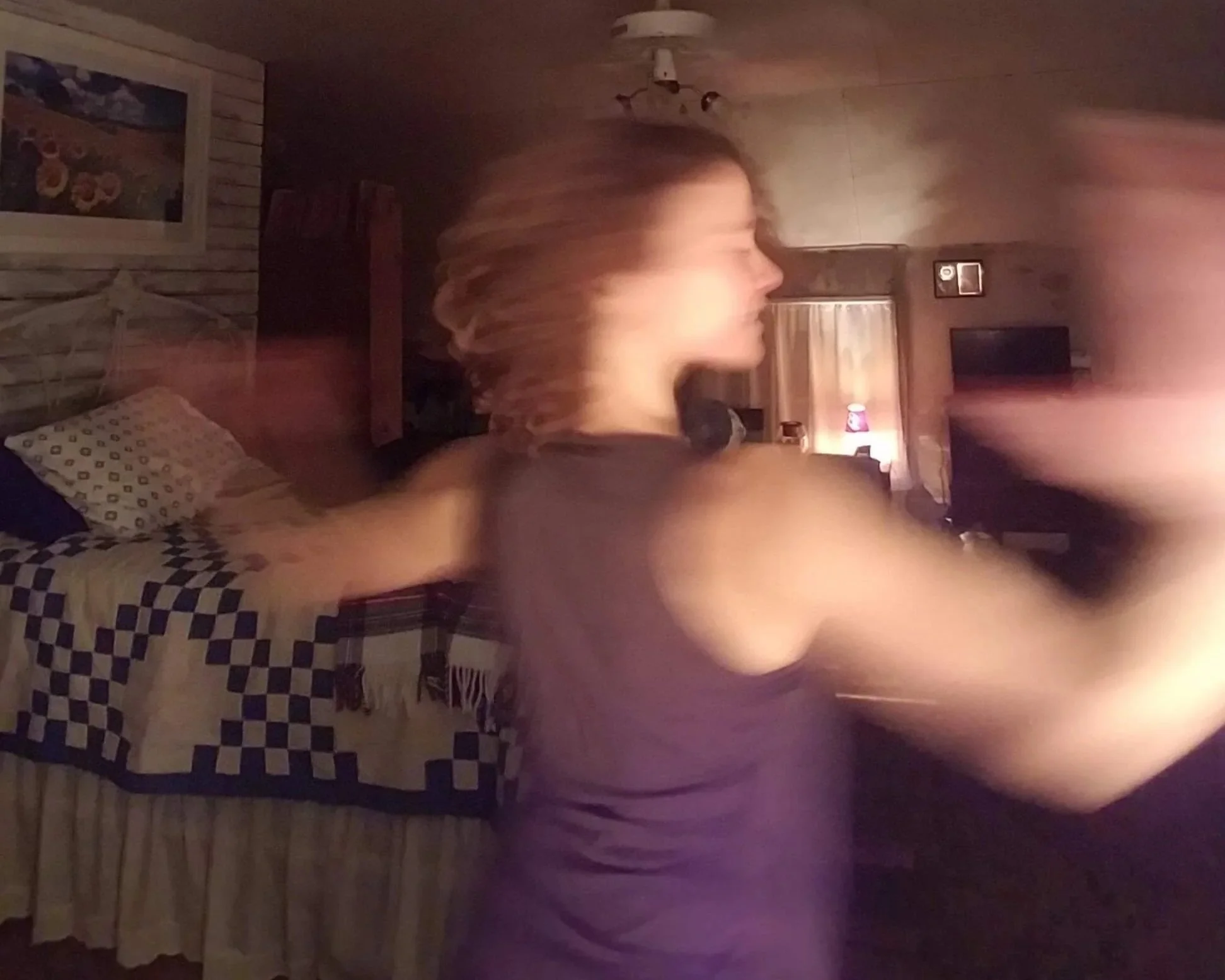
Movement as Therapy…
Movement is a language of its own. It can express what we don't yet have words for, reveal patterns we may not be aware of, and open pathways to new experiences of ourselves.
This isn't about learning to dance, performing, or moving in a particular way. It's about discovering what happens when we give ourselves permission to move with curiosity, rather than expectation or judgment.
Sometimes we can understand something intellectually without experiencing a shift in how we feel. Movement offers another way of exploring our experiences — one that doesn't always require words or an explanation.
We might explore the body's language through breath, gesture, posture, rhythm, stillness, or spontaneous movement. Sometimes this might mean following a natural impulse to stretch, sway, reach, or shift your weight. Other times, it might mean noticing a very subtle movement or sensation that is just beginning to emerge.
Micromovement — small, gentle, sometimes almost imperceptible movements — can be a powerful way of listening to the body. Especially when living with chronic pain or trauma, larger movements can sometimes feel overwhelming, inaccessible, or unsafe.
We can begin with what feels possible, allowing movement to unfold slowly and in small increments, without forcing, pushing through discomfort, or needing to achieve a particular outcome.
For those living with chronic pain, illness, or trauma, movement can offer an opportunity to gently explore patterns of holding, bracing, guarding, or disconnection. With support and curiosity, we can experiment with different ways of moving and being — perhaps discovering a little more ease, fluidity, grounding, spaciousness, or freedom.
This isn't about overriding the body's protective responses or making yourself move differently. It's about creating the conditions for new experiences to become possible.
Drawing from Dance/Movement Therapy, Body-Mind Centering, Qi Gong, Tai Chi, and yoga, I offer gentle, intuitive movement practices that are responsive to your body, abilities, energy, and needs.
The work of Bonnie Bainbridge Cohen has deeply influenced my relationship to movement, and informs the work I bring to my clients.